
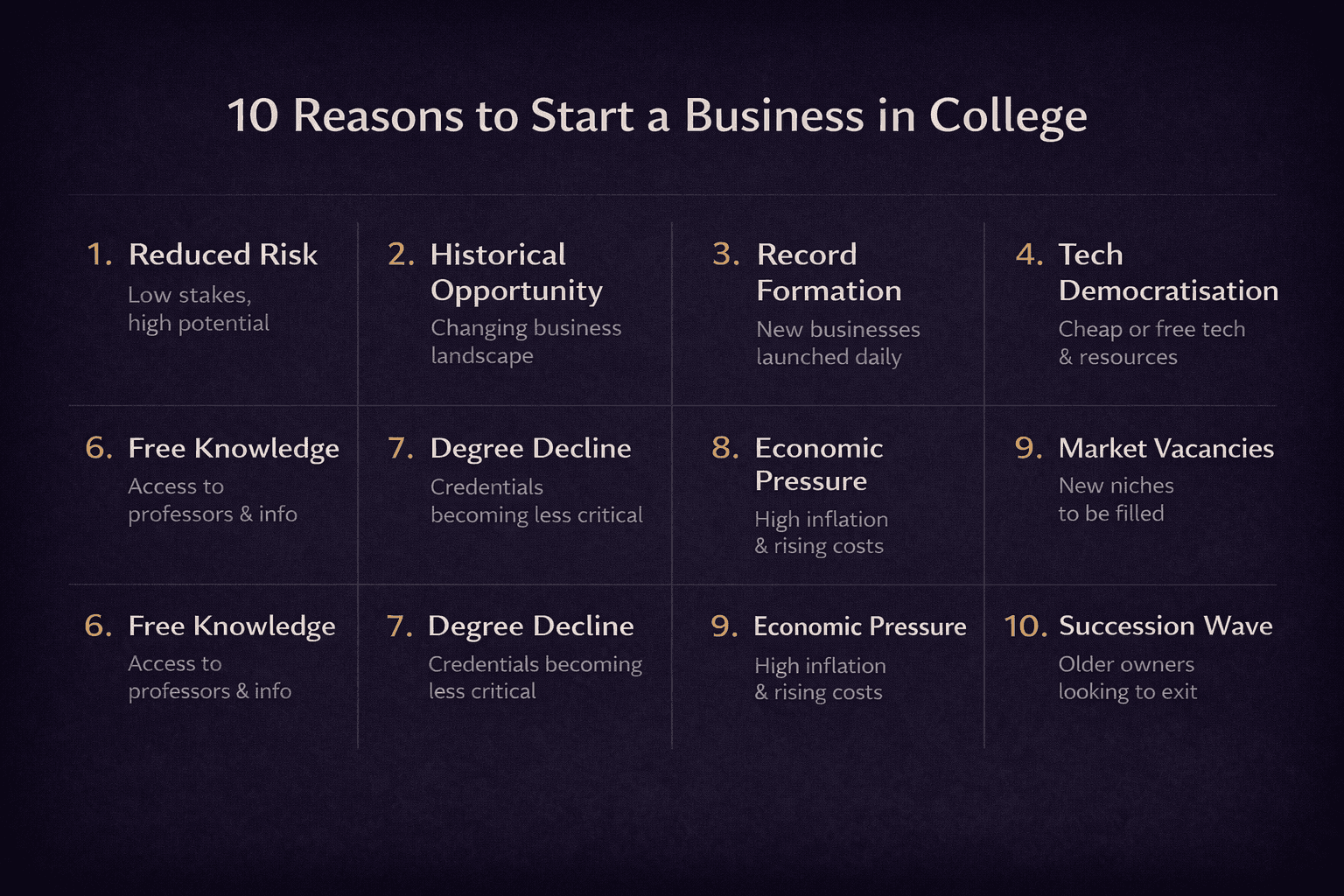
1. Reducing Risk of Starting Up and Failure
20 years ago you needed investment of some kind for a physical location, inventory, or other high costs like legality and registration. Now all you need is a couple of hours a week and a Shopify store with very little upfront cost and high potential.
Consider the print-on-demand model with a Shopify store — no inventory or physical store needed. Costs are restricted to hosting and order fulfillment. Similarly, creating software involves minimal risks; once developed, maintenance expenses are low without requiring extensive upfront investments.
In the case of failure, you can just start again. A worst case scenario of 0 is much better than –ve.
2. The Generation Before Us Started the Least Businesses Ever
All these mofos just became employees as the corporations grew. According to a WSJ analysis of Fed data, the share of people under 30 who own a business has fallen by 65% since the 1980s and is now at a quarter-century low — only about 2% of millennials being self-employed as of 2014, compared to 7.6% of Generation X and 8.3% of baby boomers.
During COVID, the overall unemployment rate for young workers aged 16–24 jumped from 8.4% to 24.4% from spring 2019 to spring 2020. COVID has accelerated our generation’s acceptance of self-employment and the gig economy. The opportunity is there and I think Gen Z is ready to take it.
The share of people under 30 who own a business has fallen by 65% since the 1980s. The opportunity gap is widening — and that is exactly where you step in.
3. Record Number of New Businesses
A record-breaking 5,481,437 new businesses were started in 2023 — the highest year on record, a 56.7% increase from 2019. The U.S. Chamber of Commerce also reported a record-breaking 5.5 million new business applications filed in 2023. It has never been easier to start a business and people are recognizing the opportunity.
4. Lowered Barriers to Entry — Technology, Capital, Globalisation
No-code tools like Bubble, Shopify, Wix have reduced any tech barriers to starting up on the internet. Anyone can set up a Shopify site or basic SaaS in a week. You no longer need upfront investment to start up — preorder waitlists and platforms like Kickstarter have changed how you can approach starting. You can hire from and sell to anyone, anywhere in the world.

5. Productivity × AI
The productivity of one person has increased 10x with the introduction of AI. We are currently using one of the worst versions of AI. Tools like AI agents will change how people approach businesses entirely.
6. Democratisation of Knowledge
You can learn pretty much anything you need to from YouTube. There are countless hours of lectures and teaching material on every subject made by extremely knowledgeable people. You no longer require the systems and processes of institutions to give you an education. Companies like Khan Academy and Buildspace will provide options for students to gain an education at a much lower cost than before.
7. The Declining Value of a College Degree
Colleges are extremely out of touch with the general day-to-day of the higher-value workforce. It’s generally common for you to learn on the job and not use much of what you learned in college after 3 years working. There is a lot of value it provides in terms of being a base and other social aspects — but in absolute terms of its value for employers and, more importantly, to prepare its degree holders for the workforce, it has been declining in value. Especially as the development of technology outpaced how quickly it could update its curriculum.
8. The Debt Is Just Too Damn High
I don’t know what the US can do on a 10–20 year time frame. I think they’re going to try to grow their way out of the debt — grow the GDP as much as they can to reduce the debt:GDP ratio. It will be extremely hard for wage growth to keep up. This will only hasten the erosion of the middle class in America. The best way to avoid it will be to capitalise on the growth with ownership.
9. Fewer Businesses = More Opportunity
The number of startups that have shut down has drastically increased. VC funding has dried up as the public markets rally. 60% of businesses that closed during COVID never reopened. There is a lot of market share up for grabs in different industries.
10. Silver Tsunami — Aging Business Owners Looking to Sell
Between 2000 and 2020, the number of business owners at full retirement age increased by 87%. Lots of business owners are looking to retire and sell, and there are not enough people willing to take over these businesses.
Actionable Steps
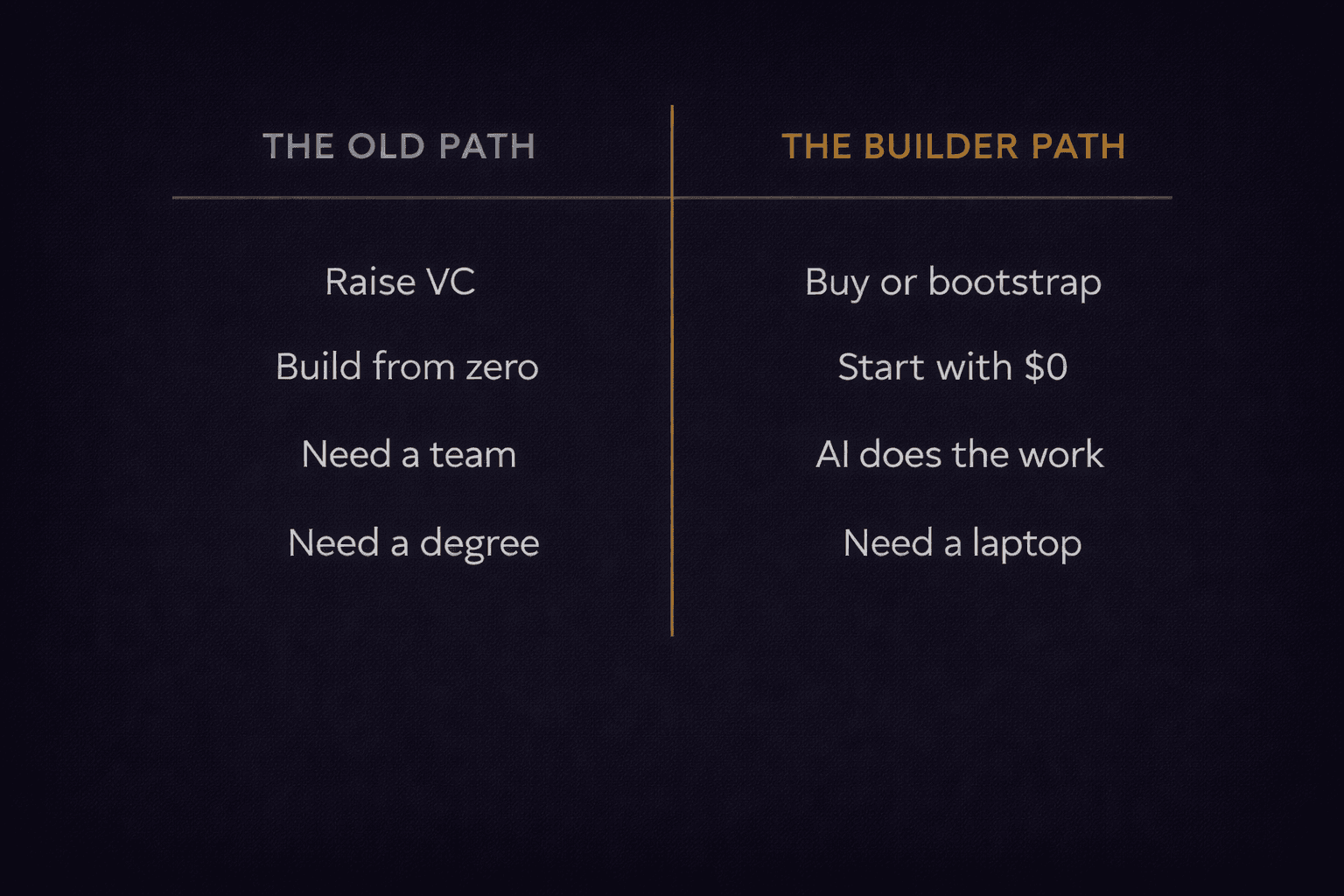
1. Start building an audience
Post things you find interesting. Expect to post into the void and that your first 100 posts will be shit. Go from there.
2. Start a business with as low effort as possible
Try to start with a small problem for a niche target audience. Try an agency, Shopify store, no-code SaaS. Just make your first $1 online.
3. Seek failure
Instead of avoiding failure, figure out how you can fail quickly and reframe failure from negative to a positive learning experience. Presume you currently know nothing and be hungry to learn.